Working with a design agency in 2026 means far more than creating visuals. Businesses now seek partners who can spark growth, deliver seamless user experiences, and stay ahead of design trends that shape brand relevance.
Knowing what to expect from this partnership helps you prepare strategically and ensures your investment translates into measurable results.
This blog walks you through the key reasons businesses choose agencies today and what you should anticipate from such a collaboration.
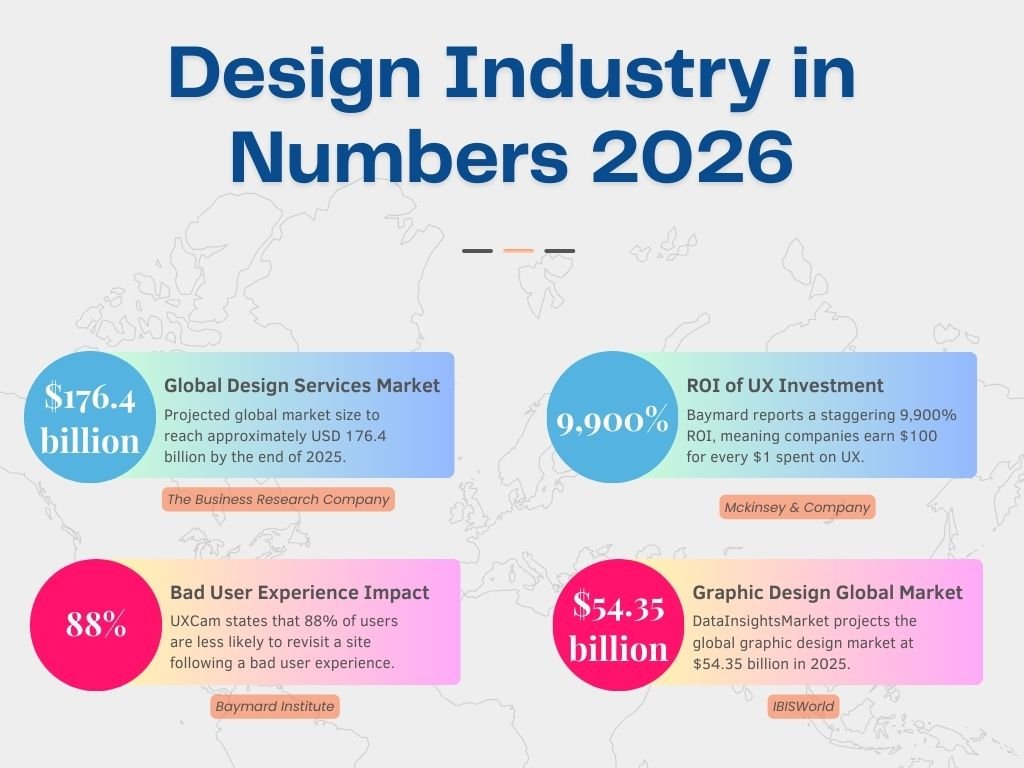
Why Businesses Choose Design Agencies in 2026
While many people still think of design agencies as providers of logos or websites, their role has grown far beyond creating visuals. Today, working with a design agency means gaining a business partner that supports long-term growth.
Some of the ways agencies add value include:
• Brand Strategy:
Agencies begin by researching audiences, competitors, and market trends before diving into design. This research-driven design process ensures that visual choices are not just aesthetic but tied directly to positioning, messaging, and business goals. For startups, this clarity saves time and prevents brand confusion later.
• Cross-Platform Consistency:
In 2026, customers interact with brands across countless touchpoints like apps, social media, packaging, email campaigns, and more. Agencies ensure these experiences feel seamless by creating unified design systems. This consistency builds trust, strengthens recall, and prevents the disjointed look that happens when design is handled piecemeal.
• Conversion Optimization:
Good design is not only about how something looks but how it performs. Agencies leverage behavioral insights and usability testing to refine layouts, typography, and color choices so they guide users toward taking action. Whether that action is a sign-up, purchase, or share, design becomes a driver of measurable outcomes. This is one of the biggest advantages of working with a design agency instead of handling design piecemeal.
• Scalability of Design:
As businesses grow, their design needs expand rapidly, from simple branding to complex UI/UX systems. Agencies build scalable frameworks like design libraries and brand guidelines that ensure coherence at every stage of growth. This means you can scale without diluting identity or rebuilding from scratch.
What to Expect When Partnering with a Design Agency
A partnership with a design agency should feel structured and transparent. Agencies in 2026 work with processes that are both agile and client-friendly. This ensures that projects move forward without confusion or unnecessary delays. Here are key things you should expect from a design agency:
A Clear Design Process
Agencies typically follow a sequence that includes discovery sessions, research, moodboards, initial concepts, feedback rounds, and final delivery. Each step is communicated upfront so you know where the project stands at any time.
Collaborative Communication
Expect to work with teams that use project management tools such as Trello, Notion, or Slack. Weekly updates and scheduled review sessions have become the norm. This level of communication prevents surprises and builds trust.
Deliverables That Drive Impact
Modern design is about business results. Instead of providing only a logo or a landing page, a design agency in 2026 focuses on conversion-ready websites, scalable brand systems, and user-tested interfaces.
When you engage a professional agency, the value lies not only in what you receive but also in how the process helps refine your own business goals.
Trends Influencing Design Agency Work in 2026
The role of agencies continues to evolve with technology and consumer expectations. Several trends are shaping how projects are executed today. Here are the most important ones:
• AI-accelerated workflows
AI tools now assist with prototyping, layout variations, and testing creative directions in minutes instead of days. This allows agencies to explore more possibilities, validate them faster, and focus human creativity on storytelling and innovation rather than repetitive tasks.
• Data-driven UX
Decisions are increasingly backed by data from heatmaps, session recordings, and real-time analytics. Agencies don’t just design what looks good — they refine interfaces based on measurable user behavior, ensuring every screen, button, and interaction directly contributes to engagement and conversions.
• Accessibility standards
Meeting accessibility benchmarks like WCAG is now non-negotiable. Agencies design with inclusivity in mind, from color contrast to voice navigation. Beyond compliance, this approach expands reach and ensures that products and brands are usable by the widest possible audience.
• Motion and micro-interactions
Micro-animations, hover effects, and subtle transitions bring digital products to life. These details guide users intuitively, highlight key actions, and create a more engaging, memorable experience. In 2026, thoughtful motion design is as much about usability as it is about aesthetics.
• Sustainable and Ethical Design
Businesses are under pressure to prove their responsibility, and design is part of that story. Agencies are adopting eco-friendly digital practices, inclusive visuals, and ethical branding approaches, ensuring that design choices align with sustainability goals and resonate with conscious consumers.
These trends show how agencies combine creativity with science. The result is design that does not just look modern but also performs.
How to Get the Most Out of Your Agency Partnership
The success of a design project depends as much on the client as on the agency. Businesses that approach the relationship strategically enjoy better outcomes. These tips are classic and evergreen in terms of impact:
Define your goals clearly
Set your goals before the project begins. Whether it’s boosting conversions, rebranding, or launching a new product, clarity is essential. A well-defined objective helps the agency align its creative approach with measurable business outcomes.
Provide references and style preferences
Agencies work best when they have a visual compass. Sharing references, color palettes, or style inspirations early speeds up the process. It reduces guesswork and ensures the creative direction matches your brand identity and audience expectations.
Be open to collaboration
Agencies bring an external perspective that often uncovers overlooked opportunities. Being receptive to their ideas can elevate the project. A collaborative mindset ensures both sides exchange expertise, resulting in stronger, more innovative solutions than either could produce alone.
Give timely feedback
Delays in feedback are one of the biggest causes of stalled projects. Provide structured, timely input on deliverables so the agency can make adjustments quickly. This keeps momentum strong and avoids costly revisions late in the process.
Clients who follow these steps find that the partnership is smoother and the final output is far more aligned with their business needs.
Common Misconceptions About Working With a Design Agency
Despite the proven value of design agencies, many businesses hesitate to work with them because of outdated beliefs. These misconceptions often prevent companies from realizing the benefits of professional, strategic design support. Let’s address the most common ones:
“Agencies are too expensive.”
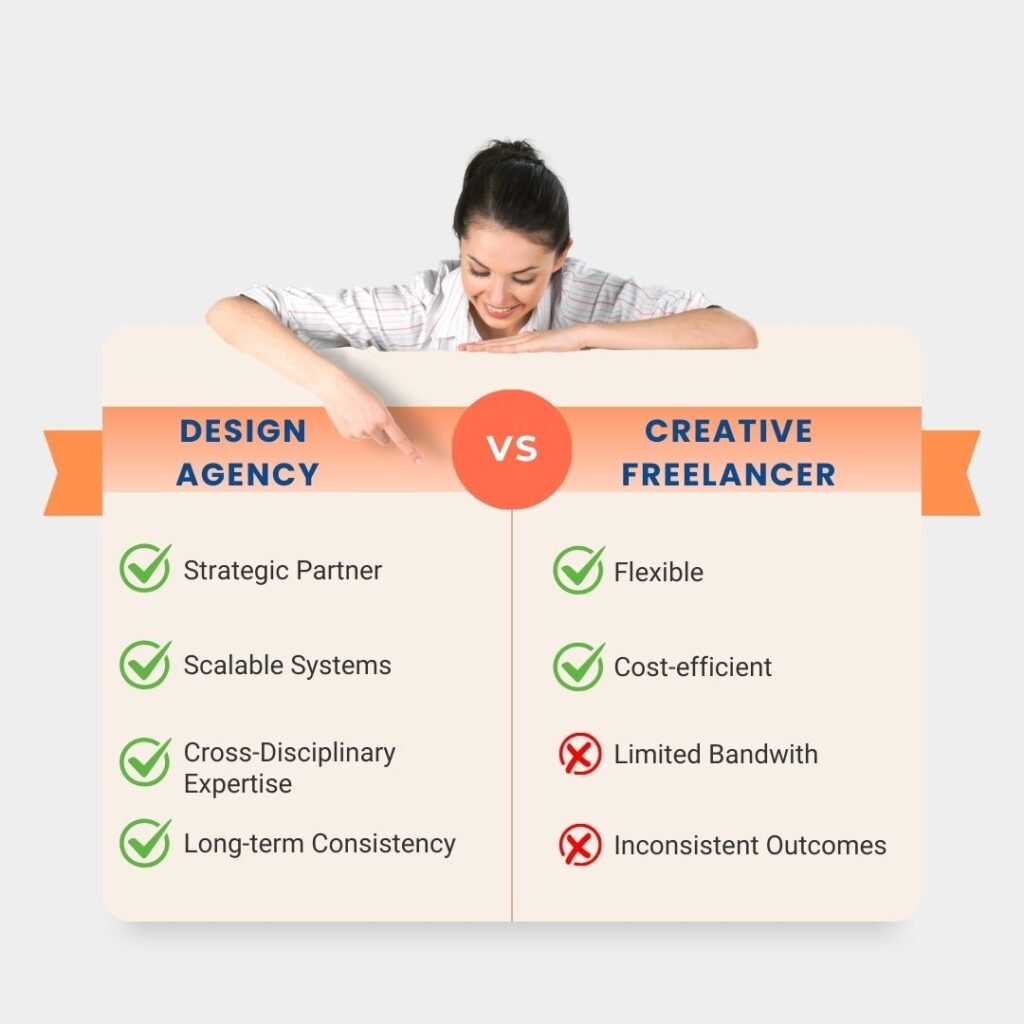
At first glance, agency fees may seem higher than hiring a freelancer or a small in-house team. However, agencies prevent costly mistakes that occur when design work needs frequent revisions or fails to meet business objectives. In many cases, the return on investment from a well-executed branding or UI/UX project outweighs the upfront expense.
“Agencies only execute instructions.”
A strong agency does far more than follow directions. It challenges assumptions, asks the right questions, and contributes insights that help refine your overall strategy. When you hire an agency, you gain access to experienced professionals who can identify gaps and propose solutions you might not have considered.
“Freelancers can do the same job.”
Freelancers can be talented, but their capacity is often limited to a single skill set. An agency brings together a team of specialists in branding, web design, UI/UX, and product strategy. This collaborative environment ensures depth, consistency, and scalability across all your design needs, something that is difficult for a single individual to provide.
By understanding these points, business leaders can move past misconceptions and view agencies not as cost centers, but as long-term partners in growth and innovation.
How to Choose the Right Design Agency for Your Business
With so many agencies in the market, the challenge is not finding one but selecting the right partner for your business. The process should go beyond portfolios and price tags. It requires careful evaluation of compatibility, expertise, and the ability to create long-term value. Here are the factors that matter most:
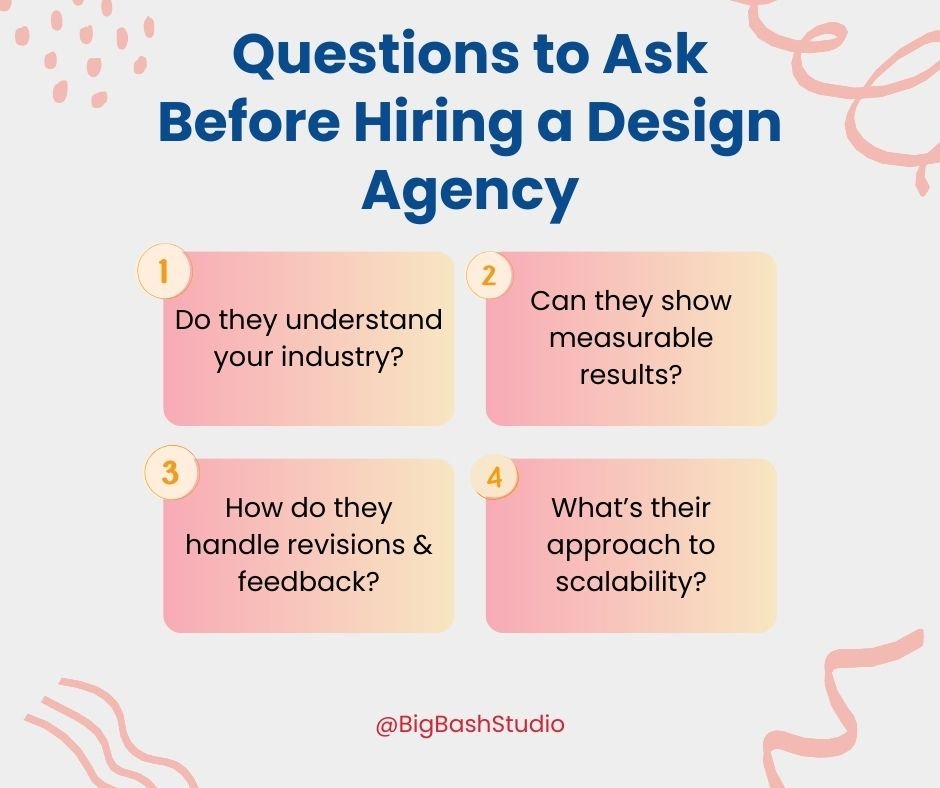
Experience in your industry
An agency familiar with your sector can anticipate challenges and deliver more relevant solutions. For example, SaaS companies often need onboarding flows that reduce churn, while e-commerce brands demand user journeys that optimize conversions.
Many businesses also explore agency directories like DesignRush to compare reputable web design companies before choosing the right partner.
When you’re working with a design agency that understands your industry, these nuances are built into the process. They design with both creativity and performance in mind. Big Bash Studio, for instance, has experience designing for startups and online businesses, which makes our work grounded in practical growth needs rather than only visual appeal.
Depth of services
Some agencies specialize in branding only, while others offer full-service solutions covering UI/UX, web design, product design, and marketing assets. A full-service agency is often better suited for businesses looking to scale because it ensures consistency across all touchpoints.
If your brand identity, website, and digital campaigns are aligned, you achieve greater recognition and trust. This is why at Big Bash we emphasize integrated design support, helping startups and growing companies maintain a cohesive brand experience.
Client testimonials and case studies
A polished portfolio may look impressive, but what truly matters is proof of results. Case studies and client testimonials show whether the agency can deliver measurable business outcomes. For example, a case study highlighting how a website redesign improved conversions is far more useful than a static mockup. Always ask for evidence of impact before making your choice.
Communication style
The right agency is not just skilled at design but also effective at communication. You need a team that can explain design decisions clearly to your stakeholders, translating complex ideas into practical business terms.
For instance, when an agency recommends a particular UI layout, they should be able to show you how it improves user flow rather than asking you to “just trust the design.” Clear communication prevents misalignment and saves time.
Long-term mindset
A valuable agency is not focused only on today’s deliverables but also on your future needs. Design requirements evolve as your company grows — you may start with a website, but later require a product dashboard, mobile app, or marketing collateral. Agencies with a long-term mindset plan for scalability so you don’t need to restart your design journey with every new phase of growth.
Choosing the right design agency is more than just finding the cheapest vendor. It is about finding a partner that can align with your goals, challenge your thinking, and deliver outcomes that drive your business forward. When you select a team with the right mix of expertise, breadth, and perspective, you are setting your brand up for long-term success.
Is a Design Agency Right for You in 2026?
Design agencies today are more than project vendors; they are growth partners. Remote collaboration, AI-powered workflows, and continuous optimization have redefined how businesses work with creative teams.
In 2026, working with a design agency is about more than getting visuals, it’s about finding a partner that aligns with your long-term vision. At Big Bash Studio, we believe this shift is an opportunity for brands to build lasting impact through thoughtful, user-focused, and strategically driven design.